
The Colorlight LED Control System is the core hardware and software architecture that translates incoming video signals into pixel-by-pixel instructions for LED display modules
1. Sending Devices (S-Series & Media Players)
Sending devices sit at the source end, taking video signals from a PC, media server, or video processor and transmitting them over Gigabit Ethernet or fiber optic cables:
- Synchronous Sending Boxes & Cards (S-Series): Devices like the S2, S4, S6F, and S20/S20F provide real-time video transmission for live events, studios, and large screens, with fiber-optic variants (marked "F") supporting long-distance runs up to several hundred meters.
- Asynchronous / Cloud Players (A-Series & C-Series): Boxes like the A100, A200, and C3 Pro combine a built-in media player with a sending card, allowing commercial billboards and retail signage to play scheduled content from onboard storage without a dedicated PC.
- Gigabit NIC Direct Mode: Unlike many competing systems, Colorlight supports sending data directly from a standard PC’s Gigabit Ethernet card to certain receiving cards without requiring a separate hardware sending box
2. Receiving Cards
Installed inside each LED screen cabinet, Colorlight receiving cards decode incoming data and drive the LED module chips via HUB75 or high-density connectors


Colorlight S20 LED Display Sender Box
Sale price$0.00 USD


Colorlight S2 LED Display Sender Box
Sale price$0.00 USD


Colorlight iM9 LED Multi-function Card
Sale price$0.00 USD


Colorlight iM9 Multi Function Box
Sale price$0.00 USD


Colorlight H2F Single Mode Fiber Optic Transceiver
Sale price$0.00 USD


Colorlight A35 Networked LED Media Player
Sale price$0.00 USD


Colorlight C4 Player LED Screen
Sale price$180.00 USD


ColorLight C3 LED display Player
Sale price$0.00 USD

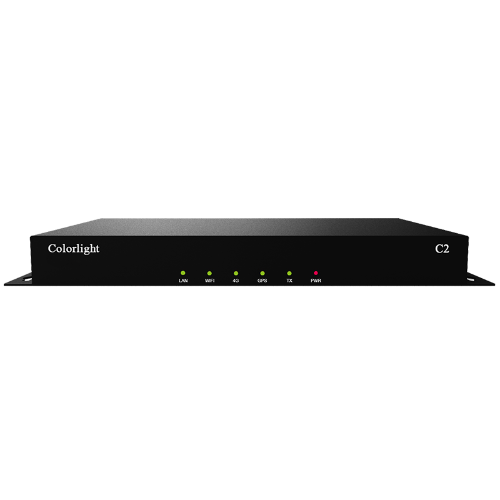
Colorlight C2 LED Media Player
Sale price$0.00 USD

Colorlight C1 led display controller
Sale price$118.00 USD


Colorlight S6F LED Display Sender Box
Sale price$392.00 USD
Regular price$425.00 USD


Colorlight S4 LED Display Sender Box
Sale price$250.00 USD


Colorlight S2 Sending Card Led Display
Sale price$90.00 USD


Colorlight i5A-907 LED Display Receiving Card
Sale price$16.00 USD


Colorlight i5A-905 LED Screen Receiving Card
Sale price$15.25 USD


Colorlight 5A-75B Receiving Card
Sale price$12.10 USD
Regular price$15.00 USD


Colorlight 5A-75E LED Display Receiver Card
Sale price$14.50 USD
Regular price$20.00 USD


Colorlight I5A Receiver Card
Sale price$13.00 USD


